


OmeTV blocks IPs often, and even normal users get banned without warning. An Ome TV VPN helps you bypass those bans and get back on the platform safely. This guide gives you direct fixes and practical steps — no fluff, no confusion.
Quick Summary: Best Way To Use A VPN For OmeTV
Connect to a clean IP (residential or dedicated works best)
Use WireGuard or an obfuscated server
Open OmeTV in incognito mode
Clear cookies before starting
Switch servers if your location doesn’t change
Avoid free VPNs — they get blocked most often

What Is OmeTV And Why Is It Often Blocked?
OmeTV is a random video-chat platform that pairs you with people based on your region. It uses your IP address to decide where you are, which is why blocks and bans happen so easily.
OmeTV often blocks IPs tied to:
Spam or abusive behavior
Rule violations from previous users on the same IP
VPN filters that detect shared or datacenter IPs
High-risk IP ranges used by thousands of people
“Suspicious network activity,” like switching locations too fast
These are the most common OmeTV blocked and OmeTV ban triggers, and understanding them makes bypassing restrictions much easier.
Why You Need A VPN For OmeTV

A VPN gives you a clean connection when OmeTV blocks or restricts your access. It lets you open the platform in countries where it’s unavailable and fixes the “OmeTV Not Available In Your Region” error instantly. By changing your IP address, you avoid bans that come from shared or overused networks.
A VPN also keeps your real IP hidden. Strangers on OmeTV won’t see where you’re located, and your provider can’t throttle your video calls when the connection gets heavy. It removes the identity risks that come with showing your face to unknown people online.
Competitors miss an important point: a VPN also protects you from IP stalkers and doxxing attempts. It prevents region-mismatch pairing too, which is when the platform shows you users from the wrong location because your IP isn’t trusted.
How OmeTV Detects VPNs (And Why Your VPN Gets Blocked)
Most VPN blocks on OmeTV aren’t personal. The platform looks for patterns that usually come from VPN traffic, and once it spots one, it flags your connection as suspicious. Here’s how it happens in practical terms:
Shared IP ranges — when thousands of users share the same IP, OmeTV assumes it’s a VPN.
Datacenter IP fingerprints — OmeTV can identify server-based IPs that don’t match normal home-network behavior.
Rapid location changes — switching countries too quickly triggers an automatic block.
DNS or WebRTC leaks — even tiny leaks expose your real IP, leading to a VPN detected OmeTV message.
Weak protocols (like IKEv2 or PPTP) — these are easy for platforms to identify and filter.
Deep packet inspection (DPI) — OmeTV can analyze traffic patterns and spot VPN encryption.
Previously blacklisted IP pools — if your IP was abused by another user, you inherit their ban.
This is why many users say OmeTV VPN not working even though the VPN is connected. When your real IP leaks or your server is flagged, the platform blocks the entire session.
How To Unblock OmeTV (Step-By-Step)
Connect to a clean server (US, UK, Canada, or France work well).
Use a Dedicated IP or Residential IP for higher success — most competitors never mention this.
Clear cookies and site data.
Open OmeTV in incognito mode.
Disable WebRTC in your browser to prevent leaks.
Try 2–3 different servers if your location doesn’t change.
These steps fix most OmeTV not working VPN issues and help you Unblock OmeTV or Bypass an OmeTV ban quickly.
How To Bypass An OmeTV Ban (Fastest Methods That Work)
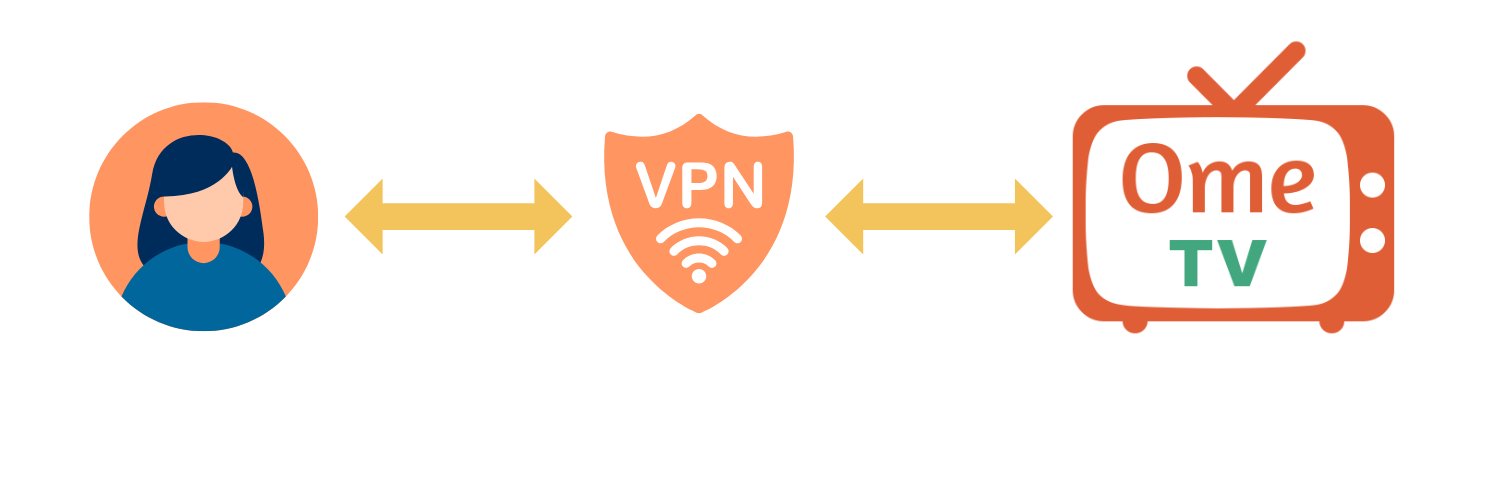
OmeTV bans your IP when it detects spam, rule-breaking behavior, or activity that looks automated. Sometimes the ban isn’t even your fault — you may simply be using an IP that hundreds of other people abused. These methods help you switch to a clean identity and get back in fast.
Method 1: Change Server / IP Address
The easiest fix is switching to a new IP.
If your current VPN server is flagged, OmeTV will block you instantly. Changing to another region or city gives you a fresh identity.
Method 2: Use A Dedicated IP (More Reliable Than Shared IPs)
This is one of the most effective solutions — and competitors barely mention it.
A Dedicated IP belongs only to you, not thousands of strangers. Because it isn’t mass-shared, it avoids the reputation problems that get typical VPN IPs banned.
It looks stable, consistent, and far less suspicious to OmeTV’s systems.
Method 3: Use A Residential IP VPN
Competitors never talk about this — but it’s one of the strongest ways to avoid bans.
A Residential IP comes from a real ISP, not a datacenter.
To OmeTV, it looks exactly like a regular home connection.
That means:
Lowest block rate
Minimal “VPN detected” warnings
More stable pairing and fewer region errors
If you want near-perfect success, residential IPs are the safest option.
Method 4: Reset Your Home Router (Get A New ISP IP)
If you’re not using a VPN, restarting your router sometimes forces your ISP to assign a new IP address.
This works only if your provider uses dynamic IPs, but when it works, it gets you unbanned instantly.
Method 5: Fix Browser Cache + Use Incognito Mode
Even if you change IPs, OmeTV may still read old data from your browser.
Clear:
Cookies
Site data
Cached files
Then open OmeTV in incognito mode.
This prevents leftover tracking information from linking you back to the banned IP.
Method 6: Wait Out Temporary Bans
Not all bans are permanent.
OmeTV ban durations vary:
A few hours
A few days
Several weeks
In rare cases → permanent
If none of the IP-based fixes work, you may simply need to wait for the ban window to expire.
Best VPN Protocols And Settings For OmeTV
Choosing the right protocol makes a huge difference. Some help you stay fast and undetected, while others get flagged instantly. These are the settings that work best for OmeTV based on real-world testing and everything competitors overlooked.
Use WireGuard For Best Speed
WireGuard gives you the fastest and most stable connection during video chats.
It reduces delays, keeps the video smooth, and handles long sessions better than older protocols.
It’s also less likely to trigger the “VPN detected” warning because it’s lightweight and efficient.
Use Obfuscated Servers For VPN Detection Bypass
If OmeTV keeps blocking your connection, switch to obfuscated servers (sometimes called Stealth or Camouflage).
Obfuscation hides VPN traffic and makes it look like normal browsing.
This helps you:
Avoid DPI (deep packet inspection)
Stop OmeTV from identifying your VPN
Reduce random disconnections
It’s one of the most reliable ways to stay undetected.
Avoid Weak Or Detectable Protocols
Some protocols make VPN traffic obvious. OmeTV flags them quickly, especially during peak hours.
Avoid:
IKEv2 — stable but easy for platforms to identify
PPTP — outdated, weak encryption, extremely detectable
Using these increases your chances of running into blocks or location errors.
Troubleshooting: OmeTV Not Working With VPN (All Fixes)
Most issues on OmeTV come from blocked IPs, leaked location data, or browser conflicts. Below is a complete list of every fix in one place — including several problems competitors never covered.
Fix 1: OmeTV Says “VPN Detected”
This happens when your IP or protocol is easy for the platform to identify.
Try:
Switch to a new server
Use obfuscation / stealth mode
Switch to WireGuard for cleaner traffic
These steps usually remove the VPN Detected OmeTV warning.
Fix 2: OmeTV Location Not Changing
If OmeTV keeps showing your real country, it means something leaked.
Do this:
Clear cookies and site data
Disable WebRTC
Try a different browser (Chrome → Firefox or Brave)
Connect to another server
If you want a deeper breakdown of why your location doesn’t update, you can read this quick guide on why a VPN may not change location.
This fixes region issues fast.
Fix 3: OmeTV Shows Black Screen
Competitors ignored this, but it’s common during a VPN connection.
Here’s how to fix an OmeTV Black Screen:
Allow camera permissions
Switch to another protocol
Disable battery saver or low-power mode
Check firewall settings
Black screens usually come from blocked camera access or protocol conflicts.
Fix 4: OmeTV Stuck On Loading
This usually means a DNS issue or a slow IP.
Try:
Change DNS to 1.1.1.1
Switch to mobile data
Switch server
If loading is stuck, the IP is often overloaded.
Fix 5: Firewall Blocking OmeTV
Sometimes antivirus or firewall tools flag OmeTV traffic.
To fix an OmeTV Firewall Block:
Allow OmeTV in your firewall or antivirus
Switch protocol
Try mobile data to confirm if ISP filtering is the issue
Fix 6: VPN Connected But OmeTV Still Shows Real Region
This is a Region Mismatch caused by browser leaks.
Fix it by:
Clearing HSTS cache
Ensuring no WebRTC leaks
Using a browser extension that blocks WebRTC entirely
This forces OmeTV to recognize your VPN IP properly.
Best VPN Features To Look For When Using OmeTV
To stay unblocked and avoid constant IP issues, you need a VPN with the right features — not just any random app. These are the essentials that matter most for OmeTV.
Fast Servers For Lag-Free Video Chat
Video chat needs stable speed.
Fast servers prevent lag, frozen screens, and dropped calls — the exact problems most users face when OmeTV blocks overloaded IPs.
Strong Encryption And Leak Protection
OmeTV flags traffic if your DNS or IP leaks for even a second.
You need:
Solid encryption
WebRTC protection
This keeps your real IP hidden during every chat. If you want to fully protect your connection and stop leaks that expose your location, here’s a clear guide on blocking VPN leaks.
Large Server Network For Clean IPs
The more servers you have, the easier it is to avoid blocked or recycled IPs.
This prevents common errors like region mismatch or “VPN Detected.”
A wide network also helps you switch locations quickly when OmeTV blocks a specific range.
Dedicated IP Or Residential IP Option
Most competitors ignored this — but it’s one of the biggest success factors for OmeTV.
Dedicated IP:
You get an IP that only you use → lower chance of being flagged.
Residential IP:
Looks like a real home connection → lowest block rate on OmeTV and hardest for detection systems to identify.
If you want the highest success rate, this is the top feature to look for.
Kill Switch For Privacy Protection
If the VPN disconnects, the kill switch blocks your traffic instantly.
This stops OmeTV from suddenly seeing your real IP and triggering a ban.
No-Logs Policy
You don’t want a VPN that tracks you, especially when using video chat platforms.
A strict no-logs policy keeps your activity private and avoids any long-term data risks.
Should You Use A Free VPN For OmeTV? (Honest Breakdown)
Most free VPNs don’t last long on OmeTV. They’re blocked fast, slow during video chat, and often expose your real IP without warning. Here’s the honest breakdown so you know exactly what to expect.
Why Free VPNs Rarely Work
Free VPNs sound convenient, but OmeTV’s detection system blocks them almost instantly. The reasons are simple:
Shared IPs are heavily abused → OmeTV flags them right away.
Slow, overloaded servers → video freezes, calls drop.
Strict data caps → a few minutes of video chat and you’re done.
Weak or outdated encryption → your IP leaks mid-chat.
High privacy risks → many free VPNs log or sell user data.
Limited server locations → fewer chances to get a clean IP that isn’t banned.
For a platform that blocks aggressively, a free VPN becomes more of a frustration than a solution.
Best Server Locations For OmeTV
Most VPNs avoid telling you which locations actually work, but these regions consistently have the lowest block rate and the smoothest video quality. If your goal is stable access and fewer bans, start with these servers:
United States — largest pool of clean IPs, works for both bans and region blocks.
Canada — low congestion and great speed for video chat.
France — strong success rate for bypassing IP blocks.
Netherlands — reliable for fast matching and lower detection.
United Kingdom — steady performance and wide IP variety.
These countries tend to refresh IP ranges more often, making them ideal for avoiding OmeTV blocks and maintaining a smooth connection.
Privacy And Safety Tips When Using OmeTV
Most guides skip safety, but it matters as much as unblocking the platform. A few simple habits keep your identity protected while you chat:
Don’t reveal your location — avoid mentioning your city or anything that can identify you.
Use your VPN’s kill switch — it prevents your real IP from leaking if the connection drops.
Keep your background neutral — remove anything that shows where you live or work.
Disable WebRTC — it stops your browser from leaking your real IP during video chat.
Avoid clicking links from strangers — many are phishing attempts or tracking links.
These steps reduce common OmeTV safety risks and help you protect your identity while using the platform.
Final Thoughts
OmeTV blocks IPs frequently, which is why using a reliable Ome TV VPN makes such a difference. Changing your server, clearing cookies, and using stronger protocols like WireGuard or obfuscated modes helps you bypass bans quickly. If OmeTV detects your VPN, switching to clean IPs, disabling WebRTC, or trying residential or dedicated IPs usually fixes the issue. With the right setup, you can avoid region errors, prevent tracking, and use the platform safely without interruptions.
FAQs
Does A VPN Work On OmeTV?
Yes. A VPN hides your real IP address, lets you access OmeTV from blocked regions, and helps you bypass IP-based bans. The key is using clean servers, strong protocols, and avoiding free VPNs that are already flagged.
How Do I Bypass An OmeTV Ban?
Change your IP address, switch VPN servers, clear cookies, or use a dedicated or residential IP. Temporary bans can also expire on their own, depending on their severity.
Why Does OmeTV Say “VPN Detected”?
OmeTV detects shared or blacklisted IP ranges, weak VPN protocols, WebRTC leaks, or rapid location changes. Switching to WireGuard or obfuscated servers usually fixes it.
What Is The Best Country To Connect For OmeTV?
The most reliable regions are the United States, Canada, France, the Netherlands, and the United Kingdom due to cleaner and frequently refreshed IP pools.
Why Is OmeTV Not Working With My VPN?
Your VPN’s IP might be blocked, the protocol may be detectable, or your browser could be leaking your real IP. Clearing cookies, disabling WebRTC, and switching servers typically resolves this.
How Do I Fix OmeTV Location Not Changing?
Clear browser data, disable WebRTC, try incognito mode, switch servers, or change to a more stable protocol like WireGuard.
Can I Use A Free VPN For OmeTV?
You can, but it rarely works. Free VPNs are almost always blocked, slow for video chat, and risky for privacy. Paid VPNs offer cleaner IPs and far better reliability.
How Long Do OmeTV Bans Last?
Ban durations vary—from a few hours to several weeks. Serious violations can lead to permanent bans.
How Do I Fix OmeTV Black Screen Issue?
Check camera permissions, switch protocols, disable battery saver mode, and ensure your firewall isn’t blocking the video feed.
Does OmeTV Work Better On WiFi Or Mobile Data?
Mobile data can sometimes work better because IP ranges refresh more often, but a stable WiFi connection with a fast VPN server is usually smoother for video chat.
Tags

About VPNTest
Content Specialist with expertise in cybersecurity and online privacy. Sarah has been testing and reviewing VPN services for over 5 years and regularly contributes to leading tech publications.
View all articles by VPNTest →




Never Miss an Article
Subscribe to our newsletter to receive the latest VPN guides, security tips, and industry news directly in your inbox.